If you're shopping for new wood flooring, you've probably come across two popular options: solid hardwood and engineered hardwood. At first glance, they can look almost identical. In fact, many homeowners can't tell the difference once the flooring has been installed. So why are there two types of hardwood flooring? The answer comes down to how they're made, where they can be installed, and how they'll perform over time. Both are excellent flooring choices, but each has strengths that make it better suited for certain situations. Here's everything you need to know before deciding which type of hardwood flooring is right for your home or business.
What Is Solid Hardwood Flooring?
Solid hardwood flooring is exactly what the name suggests—each plank is made from a single piece of natural wood. Popular species include oak, maple, hickory, walnut, and ash, each offering its own unique grain patterns, colors, and hardness.
Solid hardwood is typically ¾-inch thick and has been used in homes for well over a century. Many historic homes still have their original hardwood floors, proving just how durable this flooring can be.
Advantages of Solid Hardwood
Unmatched longevity
One of hardwood's greatest strengths is its lifespan. With proper maintenance, solid hardwood can easily last 75 to 100 years or more.
Can be refinished many times
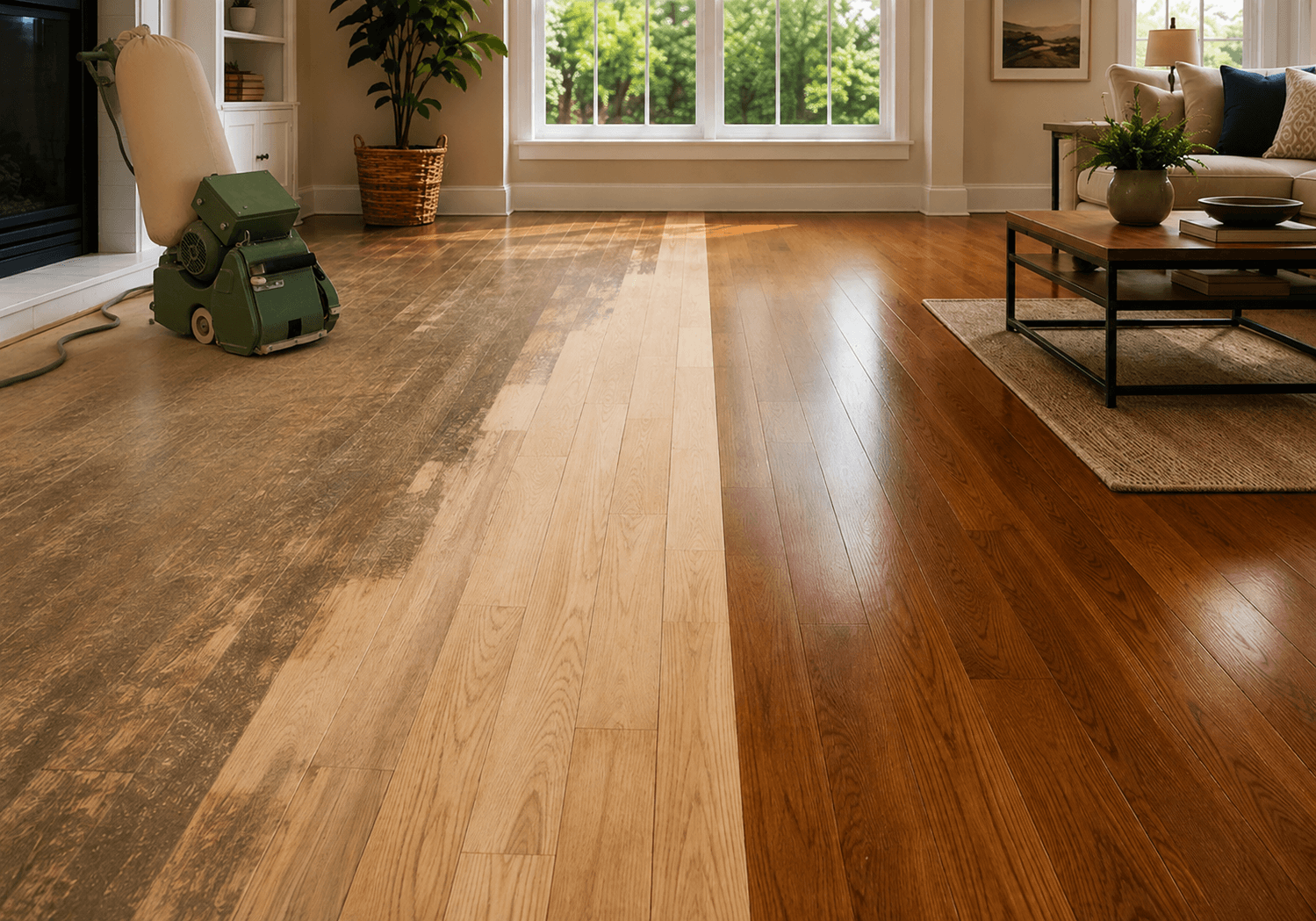
Because the flooring is solid wood all the way through, it can be sanded and refinished multiple times. Scratches, dents, fading, and worn finishes can often be completely restored, making the floor look almost brand new.
Adds significant home value
Hardwood flooring remains one of the most sought-after flooring materials among homebuyers. It gives a home a premium appearance and often contributes to higher resale value.
Natural beauty
Every board is unique. The grain, texture, knots, and color variations create character that manufactured products simply can't duplicate.
Never goes out of style
Interior design trends change every few years, but genuine hardwood flooring remains timeless.
Disadvantages of Solid Hardwood
While solid hardwood offers many benefits, it isn't perfect for every environment.
Sensitive to moisture
Wood naturally expands and contracts as humidity changes. Excessive moisture can cause boards to swell, cup, or warp.
Not recommended below grade
Basements generally have higher humidity levels, making solid hardwood less suitable unless environmental conditions are carefully controlled.
Higher installation cost
Solid hardwood usually requires professional installation, sanding (for unfinished floors), and finishing, making it one of the more significant flooring investments.
What Is Engineered Hardwood?
Engineered hardwood is real hardwood—but it's constructed differently. Instead of being made from one solid piece of wood, engineered hardwood consists of a genuine hardwood veneer on top of several layers of plywood or high-density wood core that are bonded together. This layered construction makes engineered hardwood more dimensionally stable than solid hardwood while maintaining the appearance of genuine wood. Many homeowners are surprised to learn that the visible surface is still authentic hardwood—not a printed image like laminate or vinyl flooring.
Advantages of Engineered Hardwood
Real wood appearance
Since the top layer is genuine hardwood, engineered flooring looks virtually identical to solid hardwood once installed.
Greater moisture resistance
The cross-layered construction helps reduce expansion and contraction caused by humidity, making engineered hardwood a better choice for rooms where moisture levels fluctuate.
Can be installed in more locations
Engineered hardwood is often recommended for basements, condominiums, and homes built on concrete slabs where traditional hardwood may not perform as well.
Easier installation options
Many engineered products are available with click-lock or floating floor systems, reducing installation time and labor costs.
More efficient use of hardwood
Because only the wear layer is solid hardwood, engineered flooring uses less slow-growing hardwood while still delivering the same beautiful appearance.
Disadvantages of Engineered Hardwood
Despite its many strengths, engineered hardwood does have limitations.
Limited refinishing
How many times engineered flooring can be refinished depends on the thickness of its hardwood wear layer. Some premium products can be refinished several times, while thinner products may only allow one refinishing—or none at all.
Quality varies significantly
Not all engineered flooring is created equal. Higher-quality products use thicker hardwood veneers and stronger core materials, while lower-cost options may have thinner wear layers that reduce longevity.
Typically shorter lifespan
Although quality engineered hardwood can easily last 30 to 50 years or more, it generally doesn't match the century-long lifespan of solid hardwood.
Which Flooring Is Best for Each Room?
Living Rooms
Winner: Either Option
Both products perform beautifully in living spaces. Your decision may come down to budget or long-term plans.
Dining Rooms
Winner: Solid Hardwood
Formal dining rooms benefit from the elegance and longevity of traditional hardwood.
Bedrooms
Winner: Either Option
Bedrooms experience relatively little moisture, making either flooring an excellent choice.
Kitchens
Winner: Engineered Hardwood
Small spills and changing humidity make engineered hardwood a practical option while still providing the warmth of real wood.
Basements
Winner: Engineered Hardwood
Because basements often experience higher humidity, engineered flooring is generally the safer choice.
Condominiums
Winner: Engineered Hardwood
Many condos have concrete subfloors that work exceptionally well with engineered hardwood flooring systems.
Which Flooring Is Better for Pets?
Both flooring types can scratch if pets have long nails, especially softer wood species.
Fortunately, many engineered products feature extremely durable factory finishes that resist everyday wear remarkably well. If you have several large dogs, choosing a harder wood species—such as white oak, hickory, or maple—will usually make a bigger difference than choosing between solid or engineered construction.
Which Is Easier to Maintain?
The good news is that maintenance is nearly identical.
For both flooring types:
- Sweep or vacuum regularly.
- Clean with hardwood-safe cleaners.
- Wipe spills promptly.
- Avoid excessive water.
- Use felt pads under furniture.
With proper care, both flooring types will provide decades of beautiful service.
Cost Considerations
Price varies considerably depending on wood species, plank width, finish, and manufacturer. Solid hardwood generally has the higher upfront cost due to installation requirements and thicker material. Engineered hardwood often offers savings in installation while still delivering the beauty of genuine hardwood. It's also important to think about long-term value. While solid hardwood costs more initially, its ability to be refinished many times may make it the better lifetime investment for homeowners planning to stay in their home for decades.
So, Which Flooring Should You Choose?
The right choice depends on your home, your budget, and how long you plan to enjoy your new floors.
Choose solid hardwood if you:
- Want the longest-lasting flooring available.
- Value maximum resale appeal.
- Plan to stay in your home for many years.
- Want the ability to refinish your floors multiple times.
- Are installing flooring on the main or upper levels of your home.
Choose engineered hardwood if you:
- Need greater resistance to humidity.
- Are installing flooring over concrete.
- Want hardwood in a finished basement.
- Prefer easier installation options.
- Want genuine wood flooring with added versatility.
You might also like: